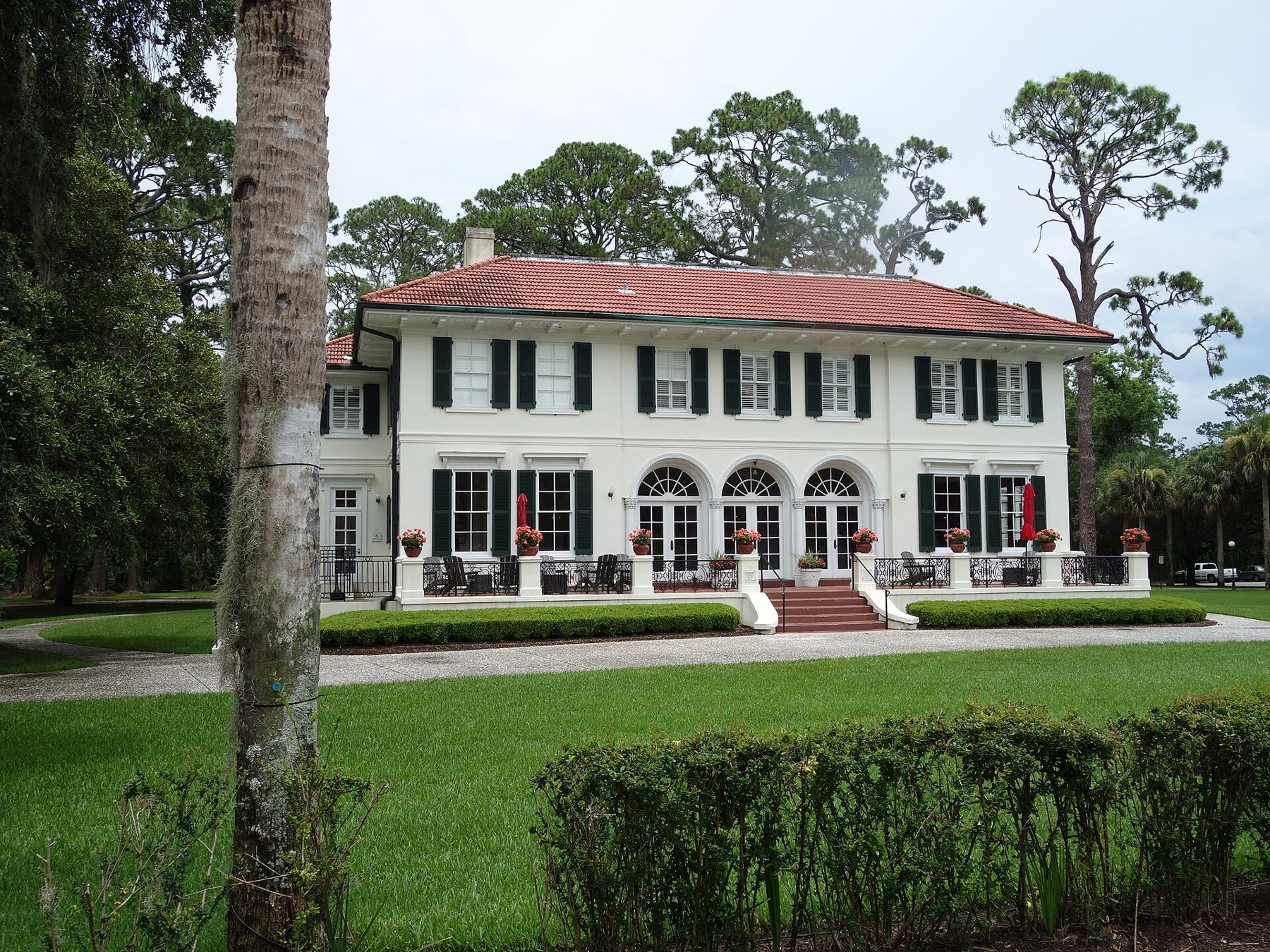
Jekyll Island is one of Georgia's Golden Isles, a barrier island about seven miles long between the Atlantic and the wide salt marshes behind Brunswick. It is unusual on this coast in one important way: the State of Georgia owns it. Since the state bought the island in 1947, it has been run by a public authority, and state law keeps the greater part of it undeveloped. The result is an island with a resort strip along one shore and, everywhere else, maritime forest, marsh and beach.
Driftwood Beach
The north end of the island has been eroding for a long time. As the shoreline moved inland, the sea reached the oaks and pines that grew behind it, killed them with salt, and left their trunks and roots standing or lying on the sand, bleached grey and silver. That is Driftwood Beach. It is less a swimming beach than an open-air gallery of fallen trees, and it changes from year to year as storms move the sand and take some trees away.
Go at low tide. At high tide the water comes right up among the trunks and much of the beach disappears. Early morning brings the softest light and the fewest people, and sunrise over the Atlantic from here is the island's best-known view. The wood is slippery when wet and some of the larger trunks are less stable than they look, so treat climbing with caution, and leave the driftwood where it lies.
The historic district
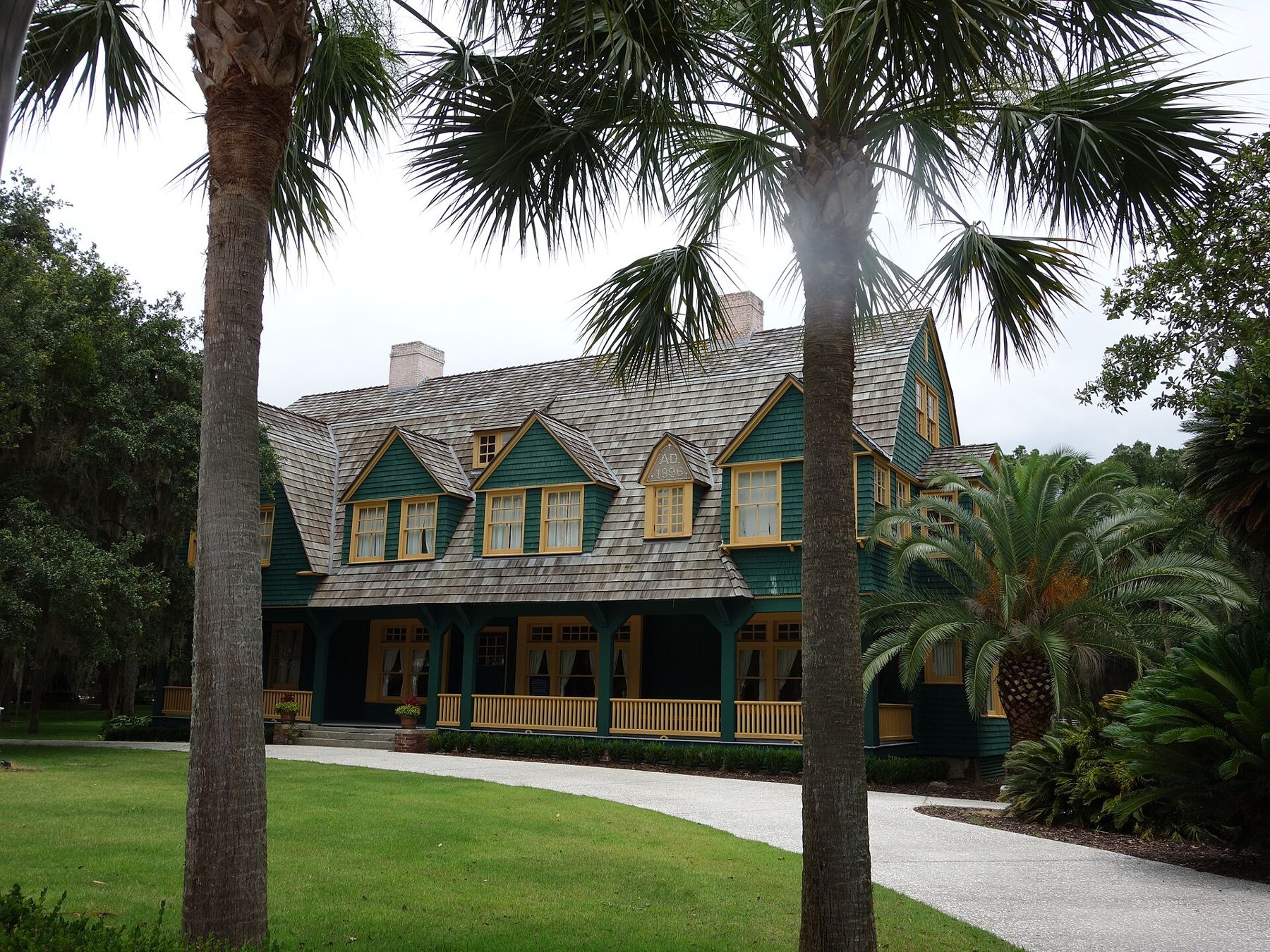
In 1886 a group of very wealthy northern families bought the island as a private winter retreat and built a large clubhouse with a turret on the river side. Over the following decades members added their own winter houses nearby, which they called cottages with some understatement: several are substantial villas in Queen Anne, shingle and Italian Renaissance styles. For half a century the island was among the most exclusive places in the country. It was here, in 1910, that a small group of bankers and a senator met quietly to draft the plan that led to the Federal Reserve.
The club's season ended with the Second World War, and the state's purchase followed. Today the historic district is a National Historic Landmark of lawns, live oaks hung with Spanish moss, and restored cottages, several of which you can see inside on guided tours from the island's museum. Walk it slowly and look at the details: the porches, the shingle patterns, the way the houses face the marsh rather than the ocean.
At the north end, the tabby walls of the Horton House stand roofless among the trees. Built in the 1740s by one of the officers of the young Georgia colony, they are among the oldest standing structures in the state and a reminder that the island had a long life before the club arrived.
Bike paths and the marsh
The island is flat and laced with paved bike paths, more than twenty miles of them, running along the beach side, through the maritime forest, past the historic district and out along the marsh on the western shore. A bicycle is the best way to see the place, and a full loop makes an easy half-day with stops. Bring your own or hire one on the island; paths are shared with walkers, so keep your speed sensible.
The western side faces the Marshes of Glynn, a vast spread of cordgrass and tidal creeks that turns green in summer and gold in autumn. The tide range on the Georgia coast is large, several feet between low and high water, so the marsh looks very different twice a day. Herons, egrets, wood storks and ospreys feed along the creeks, and at dusk the light across the grass is the reason many people come back.
Insects are part of the marsh. Biting gnats, the tiny ones known on this coast as no-see-ums, can be fierce on still, warm evenings, and mosquitoes join them in summer. Repellent and long sleeves help.
Sea turtles in summer
Loggerhead sea turtles, a threatened species, come ashore on Jekyll's beaches to nest from late spring through summer, and hatchlings make for the sea later in the season. The island has a sea turtle hospital, the Georgia Sea Turtle Center, which treats injured turtles and has a public gallery explaining the work.
If you are on the beach after dark in nesting season, the rules are simple and they matter. Keep lights off or use only the kind of red light allowed on the beach, fill in any holes you dig, flatten sand castles and leave no furniture on the sand overnight. Hatchlings head for the brightest horizon, and stray light or a hole in the sand can stop them reaching the water. Guided night walks run in season; times and booking rules change, so check before you go.
Swimming and the beaches
Beyond Driftwood Beach, the Atlantic side has long, wide, firm beaches with dunes behind them. The water is often murky green rather than clear, because of the marshes and rivers nearby, and it is warm enough for comfortable swimming from late spring into autumn. Currents can be strong near the ends of the island and around the sounds, so swim where others are swimming, watch for posted warnings and do not swim alone. Towards the south end, a sheltered beach on the sound side is popular with families at low tide.
Practical notes
- Entry: a per-vehicle parking fee is charged on the causeway as you arrive. Amounts and passes change, so check before you go.
- Season: spring and autumn have the mildest weather. Summer is hot and humid with afternoon storms; hurricane season runs from June to November.
- Time: a weekend covers the beach, a bike loop, the historic district and a sunset over the marsh.
- Pairing: the island is a natural stop on a coastal drive between Savannah and the Florida line, and fits well with a trip south towards Fort Pierce and the Indian River Lagoon.
Pack for sun, wind and insects, and bring a printed tide table. Our list for packing for a road trip covers the rest. For an island with a very different history, Galveston on the Texas coast makes an instructive comparison.