Dallas does not present itself as a walking city. It grew up on cotton, oil, banking and the freeway, and most of it is spread across the flat prairie in every direction. But the core, where downtown meets the Arts District and Uptown, is compact enough to cover on foot or by train, and the handful of places worth a long weekend sit within a few miles of each other.
Dealey Plaza and the Sixth Floor Museum
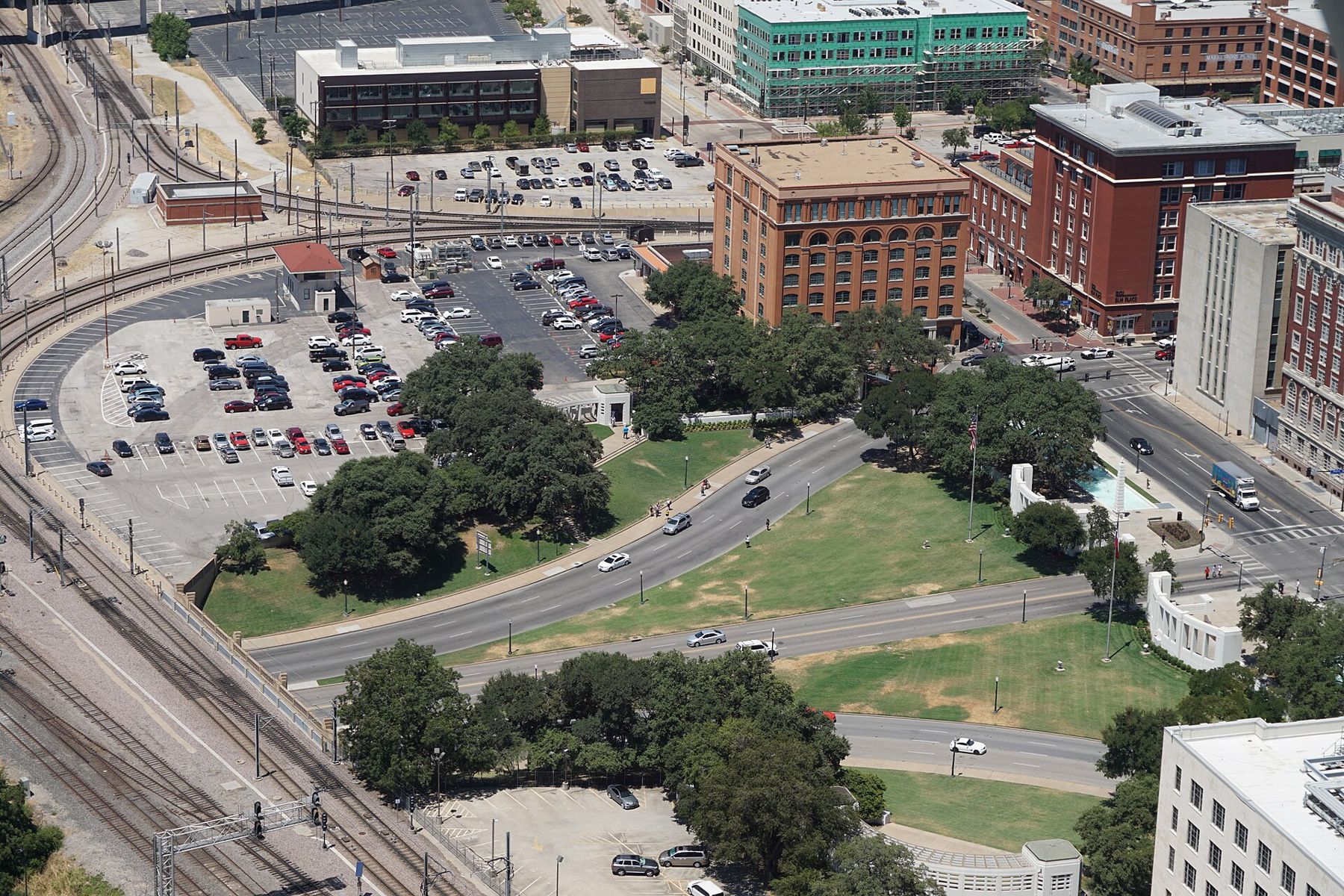
On 22 November 1963, President John F. Kennedy was shot as his motorcade passed through Dealey Plaza, at the western edge of downtown. The plaza itself is small: a triangle of lawns and colonnades where three streets converge to pass under a railway bridge known as the Triple Underpass. Standing in it, most people are surprised by how short the distances are.
The Sixth Floor Museum occupies the upper floors of the former Texas School Book Depository, the brick building on the corner from which, the official investigations concluded, the shots were fired. The museum sets out the president's visit, the shooting, the investigations and the national grief that followed, carefully and without sensationalism, and the corner window area is preserved behind glass. Entry is by timed ticket and it is busy at weekends, so book ahead and check times before you go.
A block east stands the John F. Kennedy Memorial, an open-roofed cenotaph of pale concrete panels designed by Philip Johnson. It is plain and silent, and worth the short walk. Nearby, the red sandstone Old Red Courthouse from the 1890s houses a museum of the county's history.
Klyde Warren Park
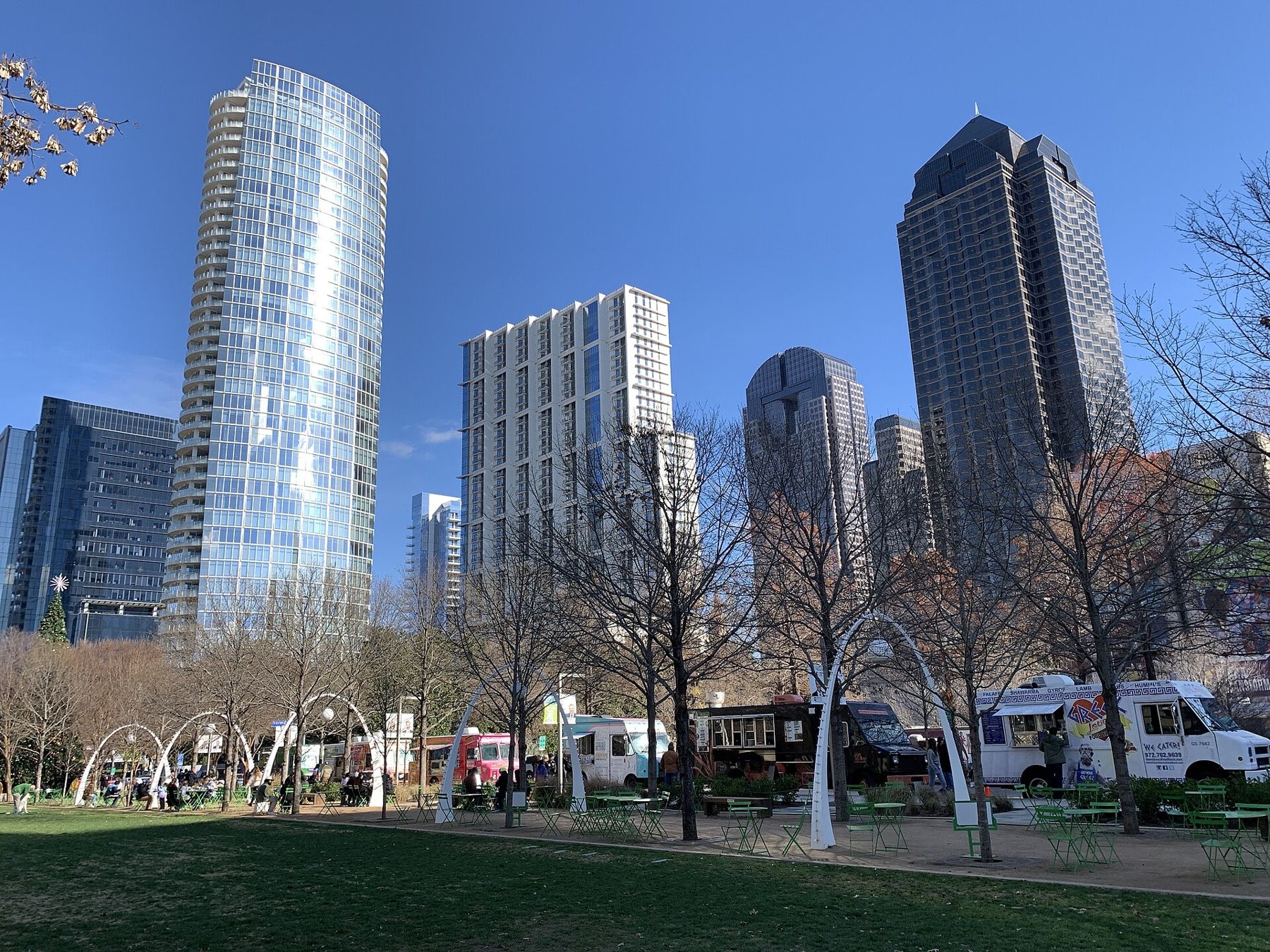
For decades a sunken freeway separated downtown from the Arts District and Uptown. In 2012 the city opened a park on a deck built over it, and Klyde Warren Park has become the city's common room: lawns, shade trees, a children's area, a dog park, a reading corner and a line of food trucks along the edge. Free events, from exercise classes to concerts, fill the calendar. Traffic runs beneath your feet the whole time, and you would barely know it.
The Arts District
On the south side of the park, the Arts District gathers museums and performance halls along Flora Street, most of them designed by well-known architects. The Dallas Museum of Art holds a broad collection from the ancient world to the present; general admission has been free in recent years, though some exhibitions charge, so check before you go. Across the street, the Nasher Sculpture Center shows modern sculpture in a building and walled garden by Renzo Piano. The Crow Museum of Asian Art is a quieter stop nearby.
The halls are buildings to see even if you do not have tickets: the Meyerson Symphony Center by I. M. Pei, a red opera house by Foster and Partners, and a stacked theatre whose stage can be reconfigured. Walk the district in the late afternoon, when the light softens and the heat of the day eases.
Fair Park
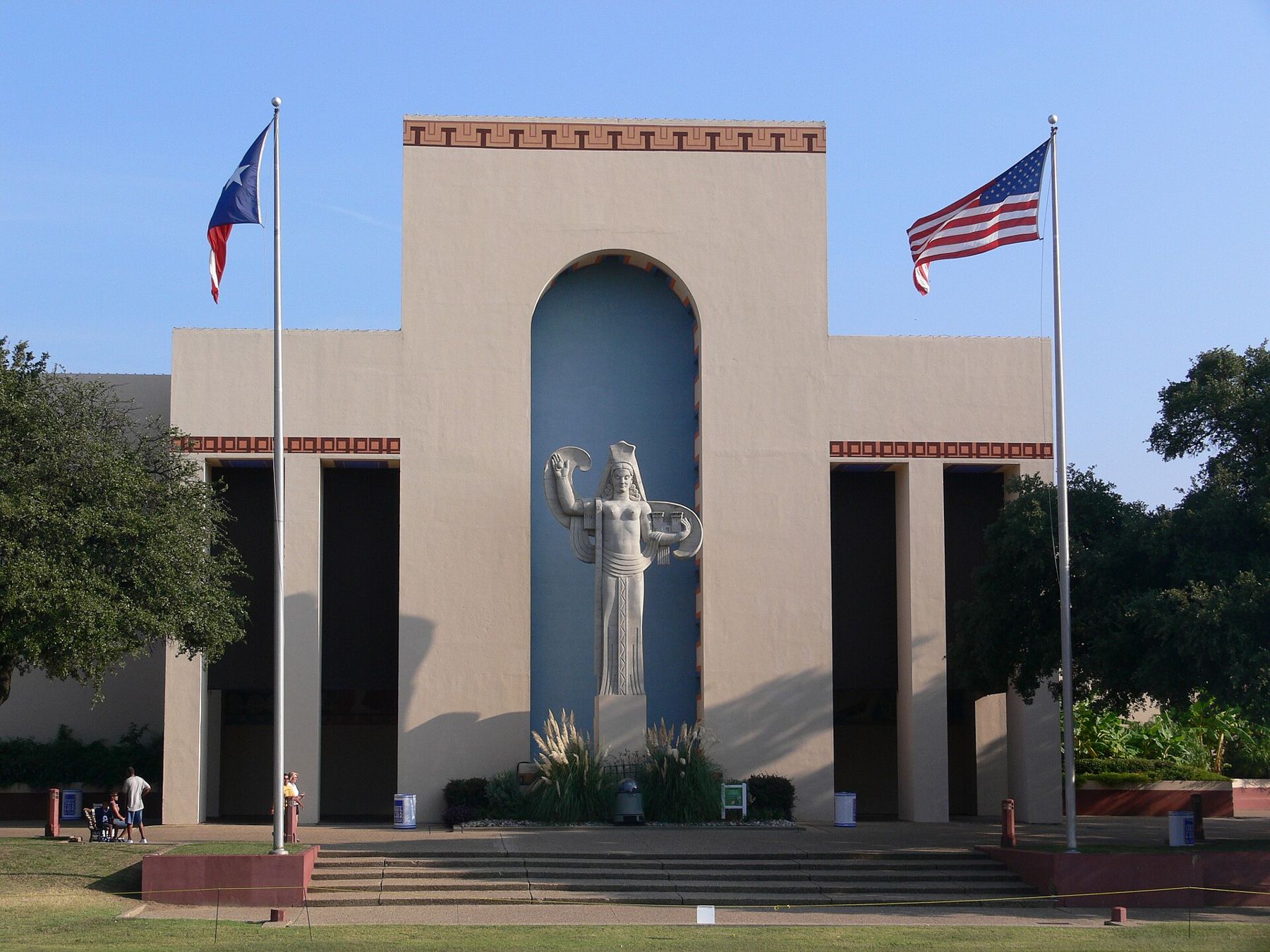
East of downtown, Fair Park was built for the Texas Centennial Exposition of 1936, and it holds one of the country's largest groups of Art Deco exhibition buildings: long halls with murals, sculpted figures and a monumental esplanade with a reflecting pool. The whole site is a National Historic Landmark. Outside the fair season it can be eerily quiet, which is the best time to look at the architecture.
Every autumn, from late September into October, the State Fair of Texas takes over the grounds, with a giant talking cowboy, livestock shows, rides and a great deal of fried food. The Cotton Bowl stadium stands on the grounds and hosts the annual Texas and Oklahoma football game during the fair. Dates and prices change each year, so check before you go. The light rail stops at the park, which saves fighting for a place to leave the car.
Bishop Arts and Oak Cliff
Across the Trinity River to the southwest, the Oak Cliff neighbourhood has older brick streets and the Bishop Arts District, a few blocks of independent shops, galleries and places to eat in low commercial buildings from the early twentieth century. It is a good place for an evening, and a modern streetcar connects it with Union Station downtown. On the way, the white arch of the Margaret Hunt Hill Bridge over the Trinity is the city's most photographed piece of engineering after its skyline.
Getting around and when to go
The light rail network, DART, runs several colour-coded lines through downtown and out to the suburbs, with one line reaching DFW Airport and a shuttle connection for Love Field. A vintage trolley runs along McKinney Avenue through Uptown and has long been free to ride. Between them you can reach every place in this piece without driving. Lines and fares get revised, so look them up before the trip.
- Spring and autumn are the comfortable seasons. Summer days regularly pass 100 degrees Fahrenheit, and spring brings thunderstorms that can be severe, with hail.
- Three days covers Dealey Plaza, the Arts District, Klyde Warren Park, Fair Park and an evening in Bishop Arts.
- Drink water and plan for shade at midday; much of the walking is on open pavement.
Dallas makes a good start for a longer Texas drive. The coast at Galveston is a long half-day to the southeast, and if you are following American history east, the battlefield at Shiloh in Tennessee is a long day's drive. Our notes on packing for a road trip apply to both.